| dc.contributor.author | Can, Abdullah Yasir | |
| dc.date.accessioned | 2025-12-26T09:21:48Z | |
| dc.date.available | 2025-12-26T09:21:48Z | |
| dc.date.issued | 2023 | en_US |
| dc.identifier.uri | https://hdl.handle.net/20.500.12723/4581 | |
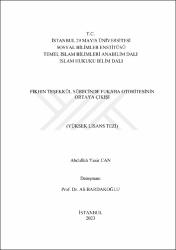
| dc.description.abstract | Müslümanların inanmış oldukları din onların dini otorite anlayışlarını belirlemiştir. Zamanla inandıkları dinin temel verileriyle tarihsel tecrübeleri birleştirerek dini, siyasi ve hukûkî olanı iç içe geçirdiler. Fıkıh veya İslam Hukuku dediğimiz olgu müslümanların din anlayışlarıyla onların siyasi ve hukuki faaliyetlerinin birleşimidir. Fıkıh faaliyetini üstlenen fukahânın otorite olarak tarih sahnesine çıkışında dini, siyasi ve hukuki otoritelerin birleşiminin etkileri söz konusudur. Fukahâ otoritesi klasik dönemde ve günümüzde müslümanların başvurduğu en büyük otoritedir. Bu otoritenin ortaya çıkışı, tarihsel kökleri, doktrine dönüşmesi ve bugün tartışılması birbirinden kopuk ele alındığı için sıkıntılara yol açmıştır. Bu süreçlerin birlikte analiz edilip fukahâ otoritesinin oluşumunu ve bu oluşumun nasıl sonuçlandığını ortaya koyup günümüzdeki otoriteye başvurma meselesinin ne anlama geldiği ortaya konulmaya çalışılacaktır.
-----
The religion that Muslims believe in has determined their understanding of religious authority. Over time, by combining the fundamental principles of the religion they believed in with their historical experiences, they intertwined the religious, political, and juridical. What we call fiqh or Islamic law is the combination of Muslims' understanding of religion and their political and legal activities. The combination of religious, political, and legal authorities impacted the emergence of the fuqaha, who undertook the activity of fiqh on the stage of history as an authority. The authority of the fuqaha is the most influential authority to which Muslims appealed in the classical period and today. The emergence of this authority, its historical roots, its transformation into a doctrine, and discussion today have caused problems because they have been evaluated independently. By analyzing these processes together, this thesis aims to understand the emergence of the authority of the fuqaha, how it resulted, and what the issue of appealing to the authority means nowadays. | en_US |
| dc.language.iso | tur | en_US |
| dc.rights | info:eu-repo/semantics/openAccess | en_US |
| dc.subject | Otorite, fıkıh, fukahâ, din, siyaset, hukuk - Authority, fiqh, jurisprudence, jurists, religion, politics, law | en_US |
| dc.title | Fıkhın teşekkül sürecinde fukaha otoritesinin ortaya çıkışı | en_US |
| dc.type | masterThesis | en_US |
| dc.department | 29 Mayıs Üniversitesi, Sosyal Bilimler Enstitüsü, Temel İslam Bilimleri Programı | en_US |
| dc.identifier.endpage | IX, 104 s. ; 30 cm. | en_US |
| dc.relation.publicationcategory | Tez | en_US |